

Cabinet Painting in Loveland, CO
The Real Reason Most Loveland Kitchens Don’t Need to Be Replaced
Walk into most Loveland kitchens that feel dated and you’ll find the same thing: cabinets that are structurally sound but visually tired. The boxes are solid. The doors still close. The layout works fine. What’s wrong is the color, the finish, or the way the wood grain has yellowed over fifteen years of afternoon sun through the kitchen window.
That’s exactly the situation cabinet painting was made for. Done properly, it transforms the room completely. Done poorly, it fails within a year and leaves you worse off than you started. The difference comes down to prep, product, and whether the crew doing the work knows what they’re looking at before they ever open a can.
At Distinct Painting Co., cabinet painting is one of the services we take most seriously. It’s also one of the services we’re most willing to talk a homeowner out of if the kitchen in question isn’t a good candidate. Not every set of cabinets should be painted, and part of our job is being honest about that.
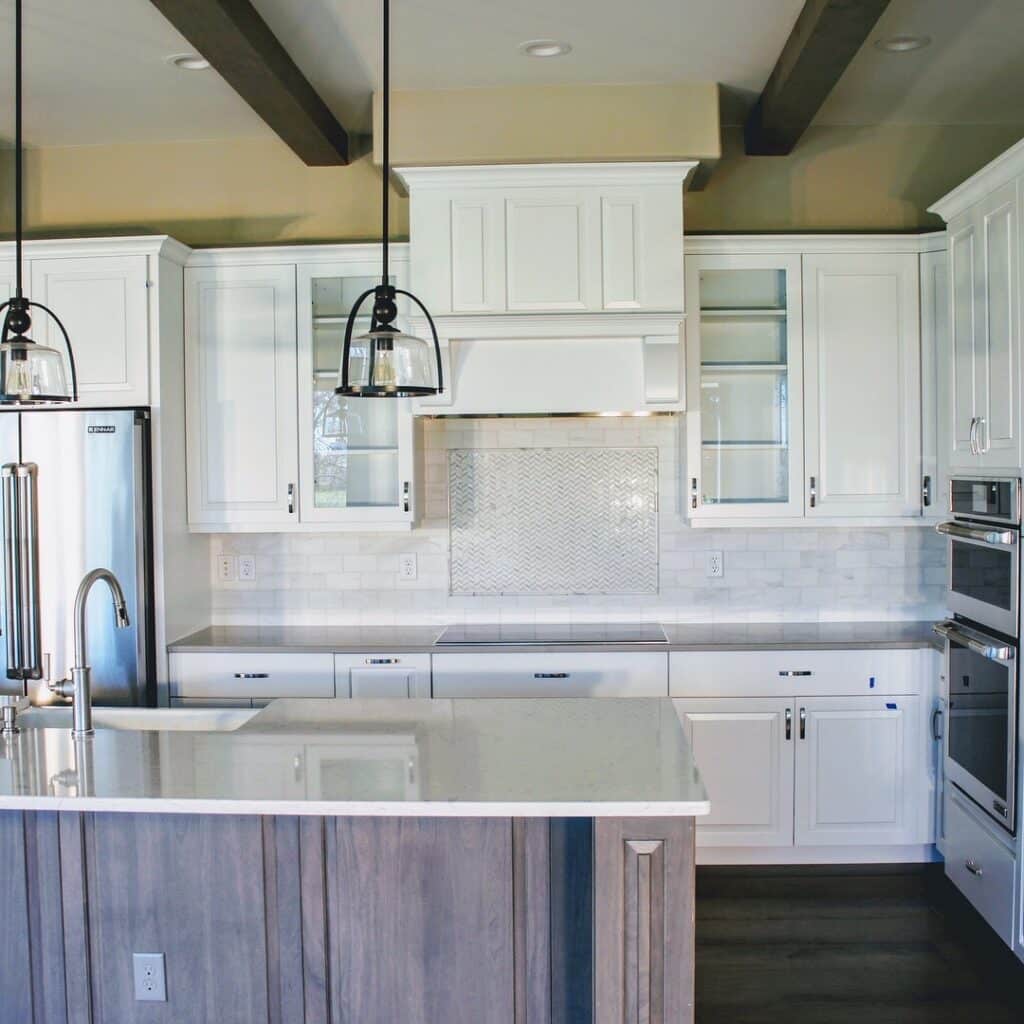
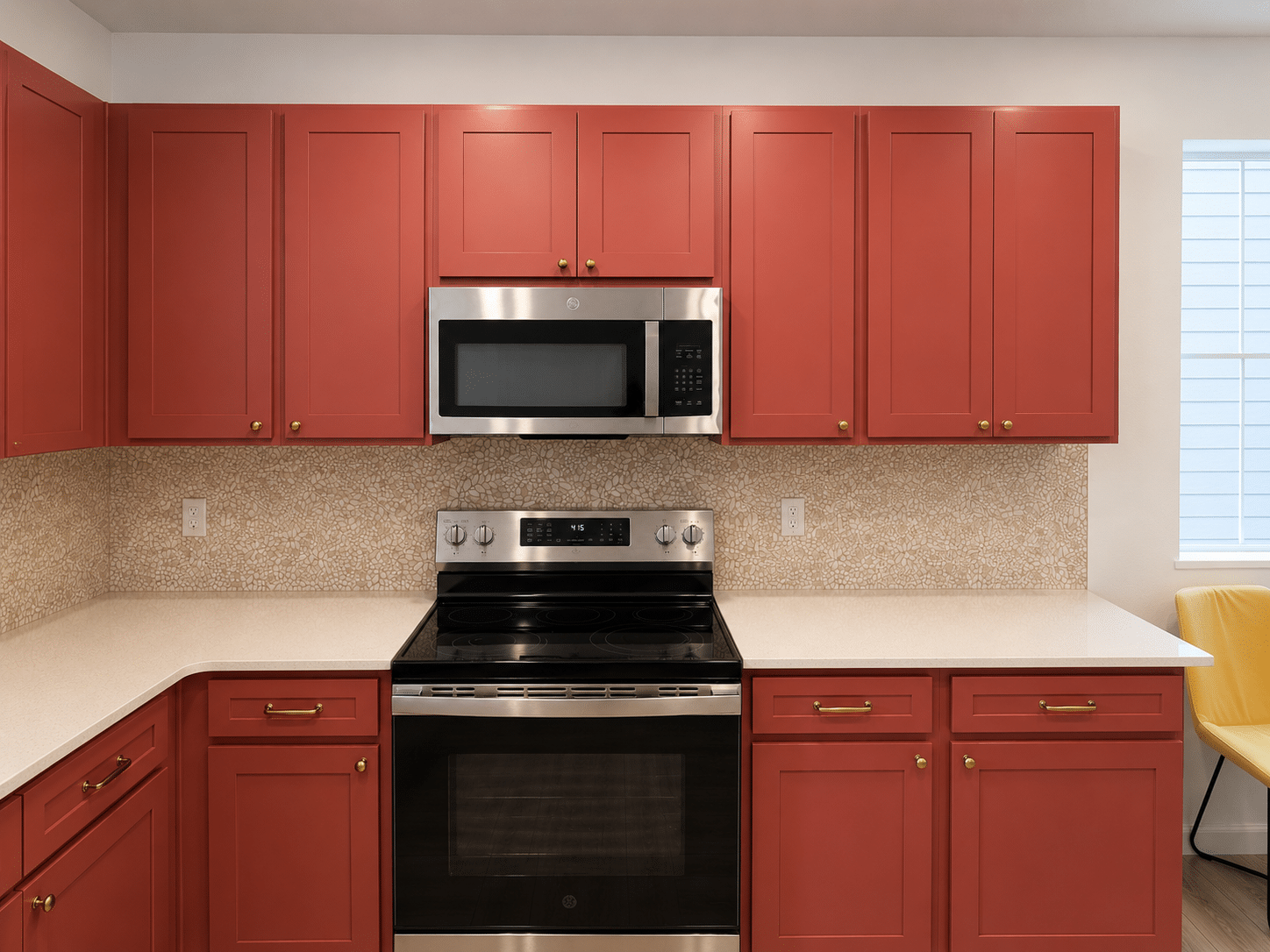
What Actually Determines Whether Your Cabinets Should Be Painted
Before I write an estimate, I want to see the kitchen. Not photos, not a description over the phone, but the actual cabinets in your actual house. There are a handful of things I’m looking at during that walkthrough, and they tell me more than any measurement.
The condition of the face frames comes first. That’s the wood you see around each door opening, and it’s where most of the daily wear happens. If the frames feel soft near the sink, that’s water damage that no primer will fix. If they’re solid, we’ve got something to work with.
Drawer boxes come next. Real wood drawer boxes, especially dovetailed ones, are worth painting around. Particleboard boxes with laminate skins that are already peeling or swelling tell a different story. We’d be putting a nice finish on hardware that’s going to fail before the paint does.
Then there’s the question of what’s already on the cabinets. Factory finishes from the big manufacturers are often conversion varnishes, which are slick and resistant to paint adhesion. They can absolutely be painted over, but only with the right bonding primer and the right prep. Standard latex primer on top of a factory varnish is a guaranteed failure, and we’ve been called out to fix enough of those to know.
Hinges and door alignment matter too. Doors that already rub against each other will rub harder with film on the edges. It’s a solvable problem, but it needs to be in the estimate so you’re not surprised when day three turns into carpentry.
The Process We Actually Follow
Here’s what happens on a cabinet painting project with us:
Doors, drawer fronts, and all hardware come off and get numbered. Every piece gets a tag so it goes back exactly where it started. This part sounds basic, but it’s the foundation of a job that looks right at the end.
Everything gets degreased, including the parts you can’t see. Kitchen film is heavier than most homeowners realize, especially above the range and around pulls where fingers go hundreds of times a week. Paint will not bond through that residue. Degreasing is slow and tedious and absolutely non-negotiable.
Sanding comes next, done by hand on anything with profile detail and by machine on flat surfaces. Any dents, dings, or gouges get filled. Previously painted cabinets with brush marks or sags get sanded flat before anything new goes on.
A bonding primer goes down first, tinted toward the final color so coverage builds faster. For most Loveland kitchens we use a specialized cabinet primer that grips factory finishes and raw wood equally well.
Then the finish coats. Two full coats of cabinet-grade enamel, sprayed in a controlled environment for doors and drawer fronts, and cut in carefully on the face frames. We scuff sand between coats so each layer bonds to the last.
The whole process usually takes four to seven days on site for a typical Loveland kitchen, plus the cure time before we rehang doors. That cure time is the piece that cannot be rushed. Doors rehung too early will show bumper marks pressed into the finish forever.
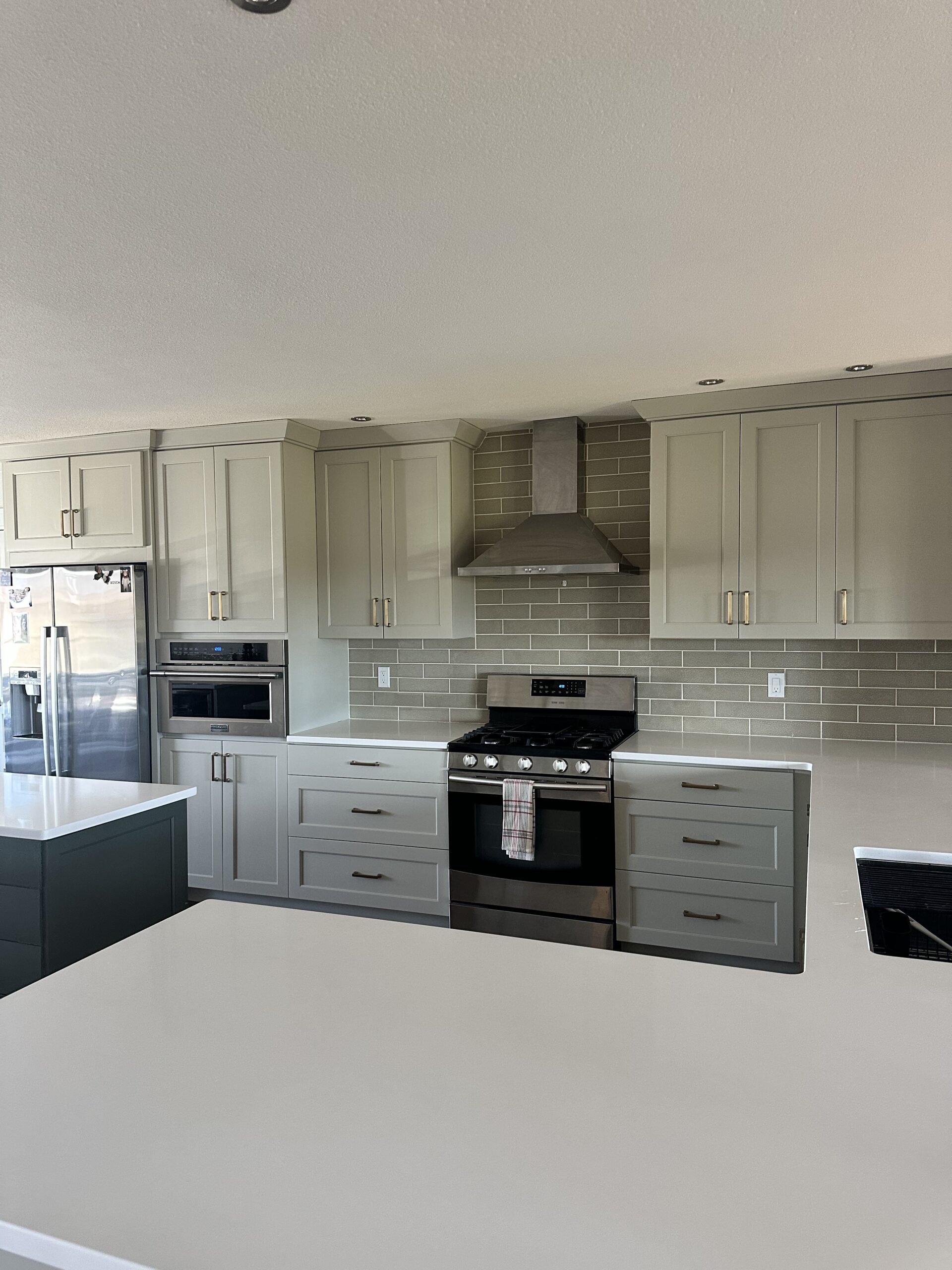
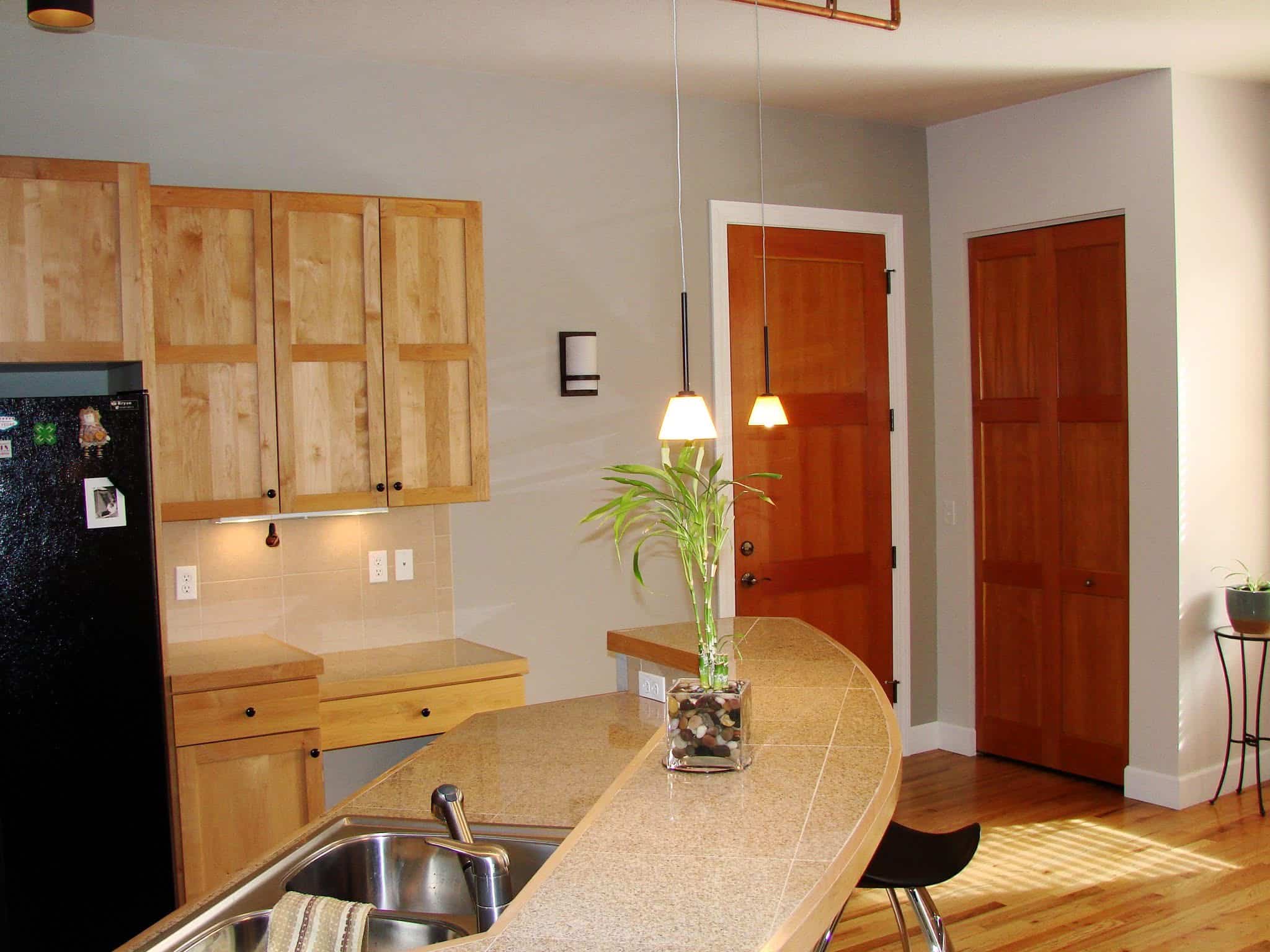
Where Cabinet Painting Jobs Fail
Almost every failed cabinet job we’ve been called out to fix comes back to one of a few predictable mistakes:
Grease that was never fully removed. Wrong primer, or no primer at all, over a factory conversion varnish. Wall paint used on cabinet doors because it was already in the garage. Cabinets rehung before the enamel cured because somebody was trying to finish by the weekend.
None of these are mysterious. They’re shortcuts, and they’re the reason you occasionally see kitchens where the finish is chipping off the edges within six months of being painted. The right process costs more time. It also lasts.
Color and Finish Help
If you already know exactly what color you want, we’ll get it. If you’re stuck between options, we offer color consultation as part of the project. For Loveland kitchens that get strong afternoon light, we’ll often put sample doors up so you can see how your top two or three choices read at different times of day. A warm white that looks perfect at noon can go slightly green at 5 p.m., and testing on your actual cabinets is the only way to know for sure.
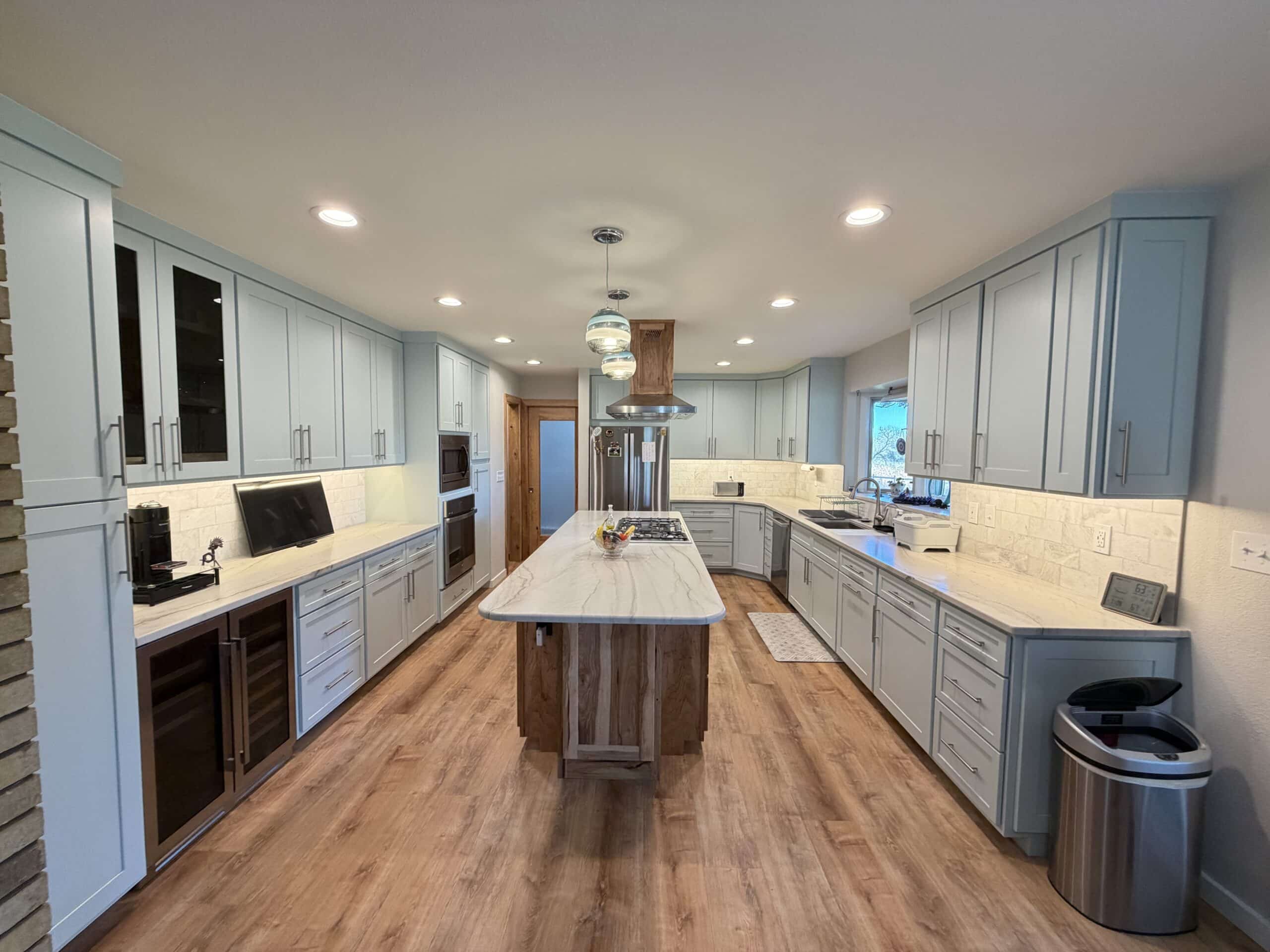
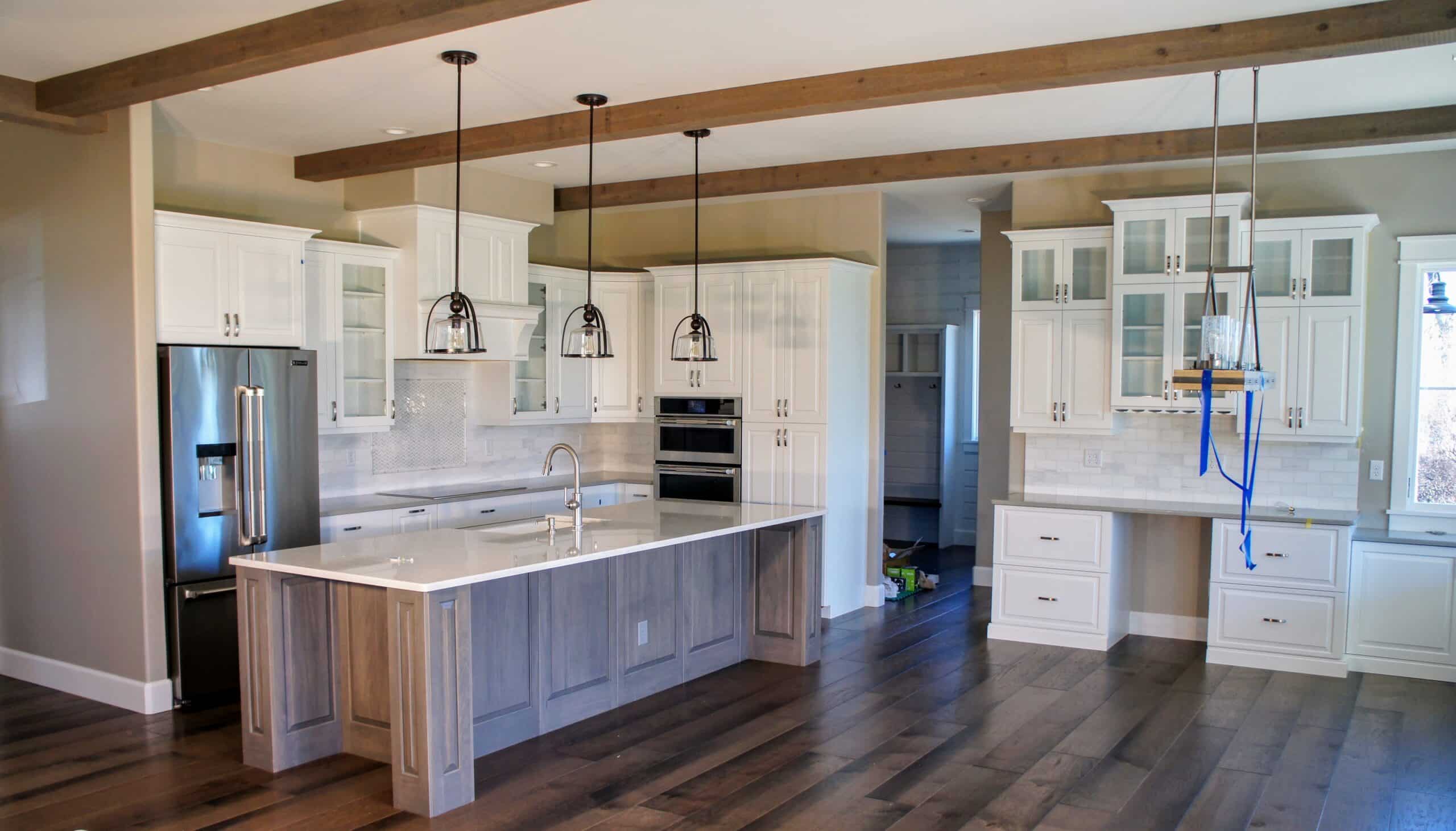
Popular finishes right now include soft off-whites, warm greiges, deep muted greens, and black or near-black on islands paired with lighter uppers. We’re also doing more two-tone kitchens than we were a few years ago, which lets you add real character without committing the whole room to a bolder color.
Why Homeowners Keep Calling Us Back
A few reasons our Loveland cabinet work tends to bring referrals:
We’re honest about which kitchens shouldn’t be painted. We quote the whole job, not just the visible parts. The crew that starts your project finishes it. We don’t collect final payment until you’ve walked the kitchen with us and told us it’s right.
That last one changes the conversation. When the only time a client pays in full is after they’re happy, both sides are motivated to get it right the first time.
Frequently Asked Questions
Most projects run four to seven days on site, depending on door count and how much repair the boxes need. The finish needs additional time to cure fully before doors are rehung, which we build into the schedule.
Technically yes, but we don’t recommend it. Sprayed finishes applied to doors off their hinges, in a controlled setup, look dramatically better than anything brushed or sprayed in place. Taking doors down is standard for us.
Yes, when the right products are used. Cabinet-grade enamels cure to a hard, washable finish that stands up to fingers, splatter, and years of opening and closing. The difference between cabinet enamel and standard wall paint on cabinets is significant, which is why we never use the latter.
Absolutely. Going from dark wood to white, or from oak to a deep saturated color, is one of the most common requests we handle. The right primer makes dramatic color changes possible without the previous color bleeding through.
We work with factory finishes regularly. The key is using a bonding primer specifically designed for slick surfaces, which allows the new paint to grip properly. Standard primers won’t do this reliably, which is why some painted cabinets fail early.
Yes. We back our cabinet work with a written warranty on both the application and the finish. If something fails prematurely, we come back and address it.
Ready to Talk About Your Loveland Kitchen?
If you’ve been going back and forth between painting your cabinets and replacing them, let us come take a look before you decide. We’ll give you an honest read on whether painting is the right call, what it would involve, and what it would cost. Reach out to Distinct Painting Co. to schedule your free consultation. Standing in your kitchen is the only way to give you an answer you can actually use.